Share with Friends

Archive for the ‘Stretching’ Category

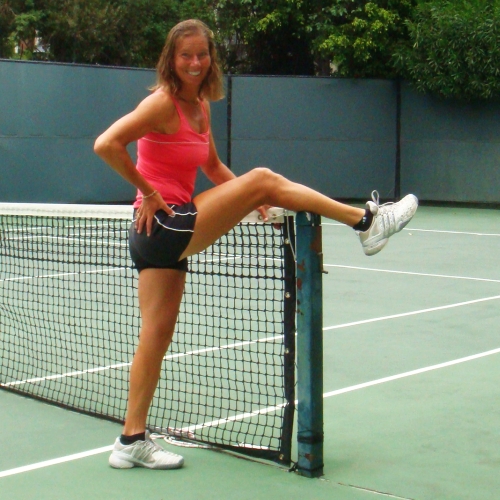
Hamstrings, the muscles in the back of the thigh, are very important for effective sprinting and powerful running strides on the tennis court. They bend the leg in the knee and straighten at the hip joint. Hamstring injury is a common occurrence in tennis. There are many reasons: insufficient flexibility, poor strength (especially in comparison to the quadriceps muscles in the front of the thigh), or faulty running mechanics. Our life style with a lot of sitting doesn’t add to the optimal well-being of our hamstrings – they are put in a shortened position and get tight and short even more. For that reason stretching of the hamstrings should be an important part of your tennis fitness and injury prevention regimen.

Read more…

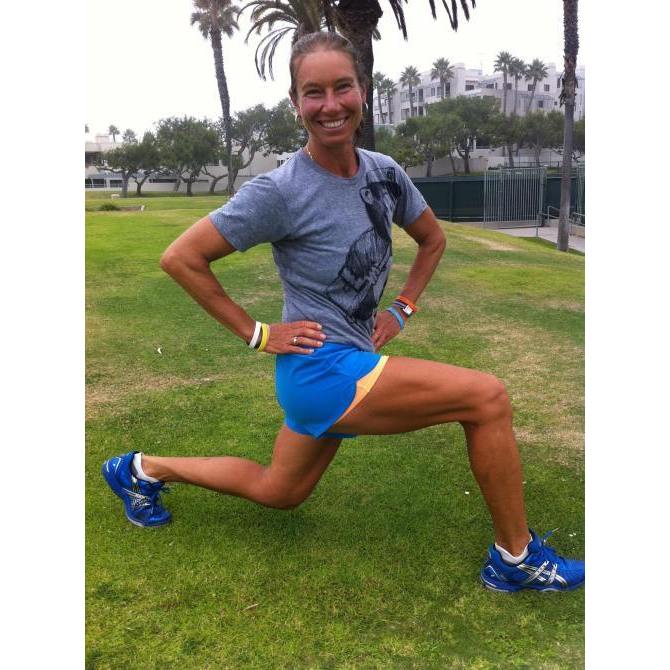
Quadriceps, the muscle in the front of your thigh, is one of the most powerful muscles in the body. You use it for all the movements on the tennis court: running, jumping, lunging, and squatting. The more you use it, the shorter it gets, and the risk of injury increases. Often the risk is even higher if there are differences in the strength and flexibility between quadriceps and hamstrings. What makes it even worse is that after your hard practice where you used your quadriceps so intensely, you sit down and the legs stay in this shortened state for prolonged periods. Especially the upper part of the quadriceps and your hip-flexors get really shortened. That’s why it is extremely important to stretch it.

Read more…

What is a proper warm-up before a tennis match? It is very personal what you like, but you should really take your time to prepare the body and mind to perform well during the match. You want to loosen up your body, increase the heart rate and get all the muscles warm and joints lubricated. Your pre-match warm up can last from 15-30 minutes. The “warm-up” time that you spend on the court prior the match should be used to fine tune your timing, analyze your opponent and get used to the conditions of the court and surroundings. The real warm-up should happen long before stepping up on the court. The beginning of your dynamic warm-up should activate many muscles and turn on your mind. Some exercises should challenge the small stabilizer muscles and balance. You must think and concentrate to coordinate your body. Work through the whole body until all muscle groups are targeted, warm and ready to perform.

Read more…

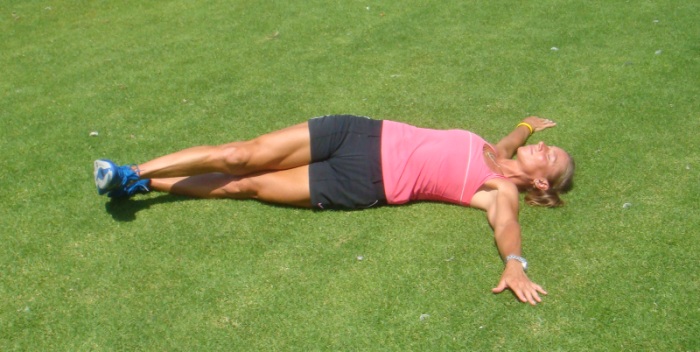
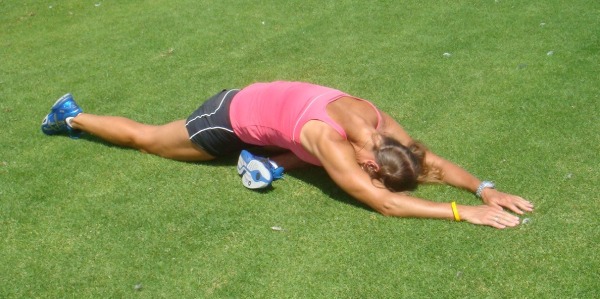
Hips are extremely important for a tennis player. Tight hips limit the range of motion and ease of movement on the court and can cause muscle strains and tendinitis. For example, if you need to get low down for a shot and if your hips are tight, you will bend in the waist rather then flexing your hips and knees and that will cause more strain on your low back. Your shots are not going to be as powerful, because you cannot engage your core the same way. It is very important to keep the hip muscles loose and functional to play good and injury free tennis. Often the hips are tight because they are pulling against tight groin muscles. Before you can effectively stretch your hip muscles, you have to loosen up the groin muscles, for example with the seated groin stretch, and the laying down frog stretch.

Read more…

Flexibility training is possibly the least popular and the most underrated element of tennis fitness training. Even though you might have heard a lot of contradicting opinions about the importance of stretching in the injury prevention, it is obvious that the flexibility of the muscles and joints plays an important roll in any athletic movement. The definition of flexibility is “the range of motion in the joint and its surrounding muscles”. The muscles that are not tight can move more efficiently and in a bigger range of motion resulting in better performance and less injuries, because the limb can move further before an injury would occur.

Read more…

Take a good look at your hips. There’s a chance that they are not in balance: one edge may be higher than the other, or is more forward than the other. In worse cases, the hip can be both up and forward and completely out of balance. Tennis is a strenuous activity, working all the muscles of your lower and upper body. Unfortunately, most of the tennis players are one-side-only dominant, which creates more overuse of some muscle groups than others. The legs and hips are loaded with huge forces each time you start and stop, change the direction, and hit your strokes.

Read more…

The hips are the center of your body. They connect the lower body and the upper body to work as a unity. They provide stability, strength and flexibility to both halves. Misaligned hips will cause you a lot of troubles – pain in your low back, knees, shoulders or ankles, and possibly create some more serious future injuries. If your hips are not properly aligned, your movement pattern is not correct and thus your joins are exposed to extra forces and frictions, especially on the hard, concrete courts of Los Angeles. It is extremely important to take a good care of your hips to keep them strong, flexible and properly aligned.

Read more…

Sun Salutations are the ultimate awakener of your body and mind. You should always return to this exercise when you need to feel good. It is going to wake you up in the morning, energize you during the day, or if you feel stressed out, it will calm you down. The versatility of this exercise is because it has a strong focus on breathing. All the movements are coordinated to your deep, slow breath. The deep breathing brings a lot of oxygen in all your muscles and you will feel energized and relaxed. The series of twelve poses will improve the strength and flexibility of most of your muscles, joints and the spine.

Read more…

Our modern life style creates a “forward” posture, where the head is tilted forward instead of being straight over the shoulders. Shoulders are rounded and moved forward instead of being perfectly above the hips. Lower back has lost its natural sway curvature. The body is fighting to keep its balance and some muscles are working way too hard for that. That’s why you often feel tightness in your neck or low back. Let’s help your body and do the Wheel that is stretching everything “backward”. The best time to do the Wheel is after your tennis practice, at the end of all stretches. It will reveal  ALL the imbalances that are developing in you – tightness in your hitting arm’s wrist or elbow, the hitting arm’s shoulder, or one of your hip-flexors is most probably tight and achy too.

Read more…

We all know that feeling – tight neck, maybe a slight tension headache and a bit stiff low back. Whatever you do, nothing really helps. In another article about how to rejuvenate your spine with Cats and Dogs, you’ve learned about the imbalances of a “forward” life style, which we all more or less have. Tennis is an activity that is not helping to create additional balance in your body… Many more forehands (“forward” muscles) compared to backhands… serves, overheads, forehand volleys… All that is mostly with one arm only. Then when you are tired or need a little break, you are slouching on the bench, leaning and bending forward. Imagine what is happening to your body over time.

Read more…

"Get Strong" Tips
Do you want to become a better athlete? An effective core training routine will do it fast. Learn these 16 core exercises that you can do anywhere and see the results almost immediately!

* = required field
Search All Articles
Fitness & Agility Classes

See CALENDAR for the detailed schedule.

Partners

My favorite fitness store


Tennis Fitness Tools


Healthy Yummies
100 Calorie VitaMuffins

Play tennis injury-free forever